
How do porta potties work day to day?
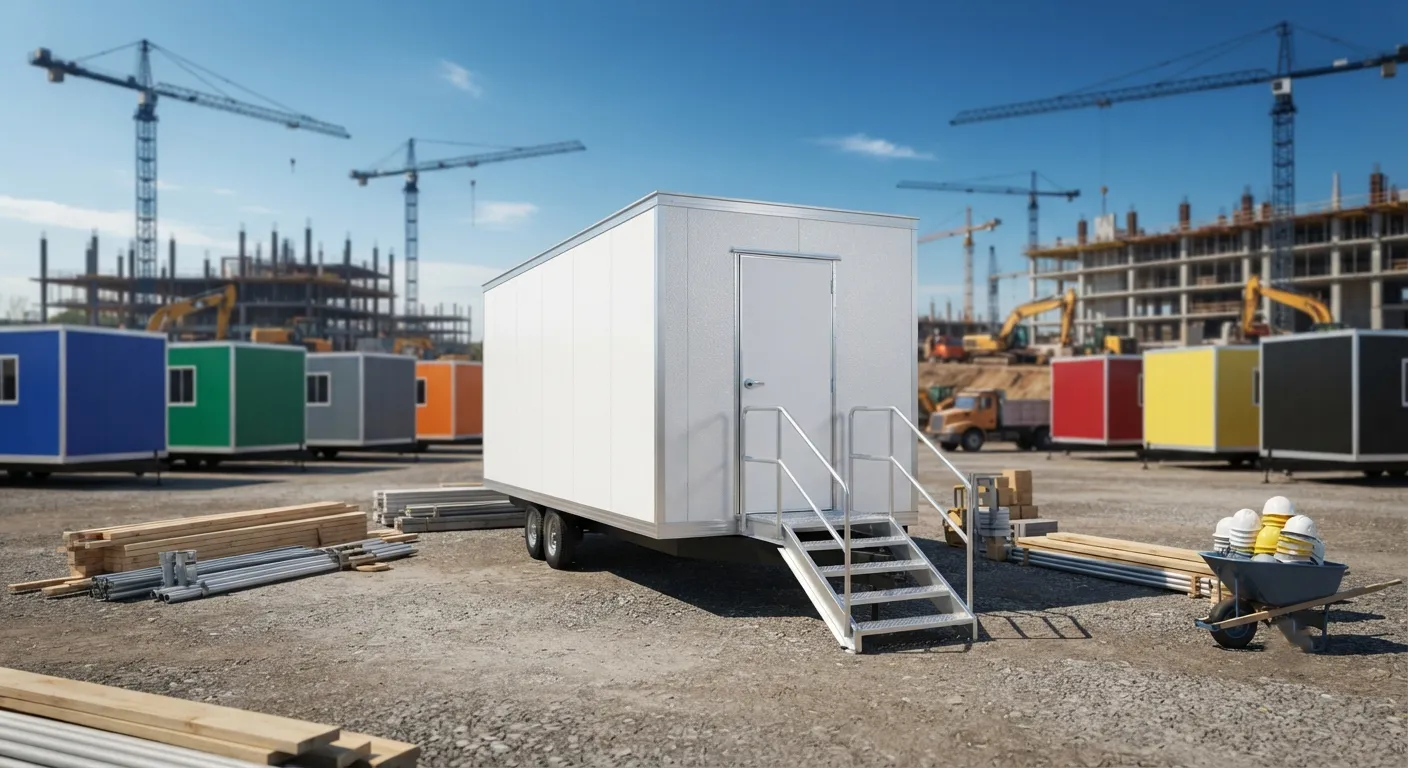
Think of it as a sealed box, not a bathroom. A standard unit stands about 92 inches tall and sits on a footprint near 44 by 48 inches, small enough to tuck against a fence line or job trailer. Inside, the seat sits over the holding tank, and the blue liquid you see is a deodorizer and enzyme treatment, the same category as septic tank cleaning chemicals used in home systems, just formulated for a sealed unit instead of a drain field. There's no plumbing running to it. That's the whole trick: everything stays contained until a service truck pumps it out and refills the chemical. For a construction worker running to a porta potty between concrete pours, the unit just needs to be close, stable, and not tipped over on uneven ground. We follow ANSI/PSAI Z4.3 as our baseline service interval, which calls for weekly pumping at up to 10 users over a 40 hour week. Busier sites get serviced more often. If you're speccing a job site in La Habra, our construction site services page walks through how many units a crew that size actually needs.
How do flushable porta potties work?
A deluxe or flushable unit adds a small onboard freshwater tank and a hand pump or foot pump that pushes a splash of water into the bowl after each use, which rinses waste down into the holding tank instead of letting it sit exposed. It still doesn't connect to a sewer line. The freshwater tank and the waste tank are separate compartments, so you're never pumping the same water twice. These units cost more to rent because they carry more moving parts and need more frequent restocking of water and chemical. Our deluxe flushable porta potty page has the specs if you're comparing against a standard unit for a wedding or backyard event in La Habra. For anyone camping in the hills above La Habra or running a weekend job site, the same flush mechanic is what makes camping porta potties feel less rustic than a standard pit toilet.
How does a portable sink work?
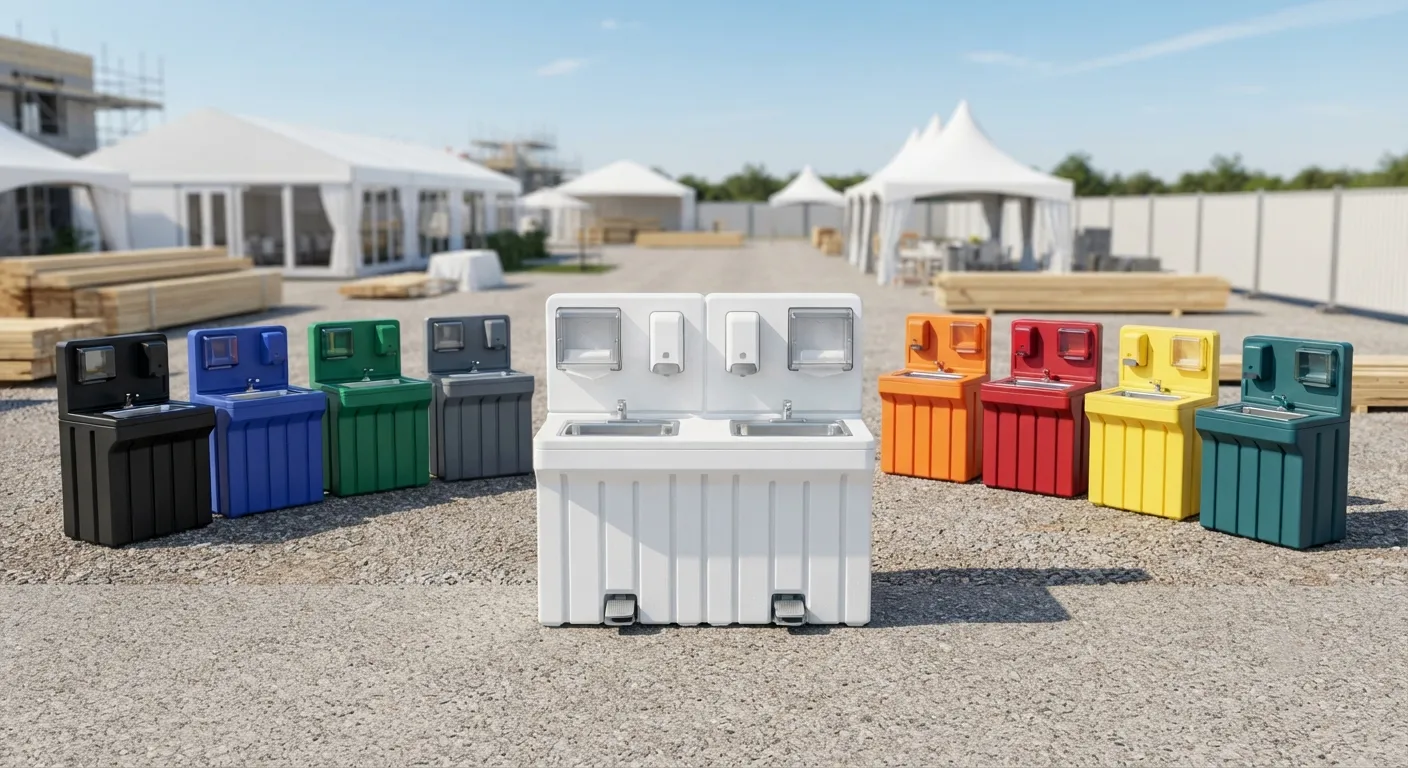
A portable sink runs on the same no-hookup logic as the toilet: a freshwater reservoir up top, gravity or a foot pump to move it through the faucet, and a gray water tank underneath to catch runoff. Soap dispensers are usually built into the unit. This matters because 29 CFR 1910.141(d)(2) requires soap and towels or a hand-drying device at washing stations, not just sanitizer, so any handwashing setup on a regulated job site has to include both. OSHA 1926.51(f)(1) requires washing facilities specifically where workers apply paints, coatings, herbicides, or insecticides, so a paint crew or landscaping crew on a La Habra job needs a sink station, not just a hand sanitizer stand. We stock both. Our portable sink rental and hand sanitizer station rental pages break down which one fits which job.

Why do porta potties need regular service?
Because the tank is sealed and finite, and once it's full, it's done working. OSHA 1926.51(c)(1) sets minimum toilet counts on construction sites: one unit for 20 workers or fewer, then one toilet seat and one urinal per 40 workers as the crew grows past that, dropping to one per 50 once you hit 200 workers or more. That ratio only holds if the units get pumped on schedule. A crew that skips service on a busy La Habra site will hit capacity fast, especially with more workers using fewer units. Our trucks handle both the pump-out and the chemical refill in one visit, and we can service standard units, ADA accessible units, and full restroom trailers on the same route. If you're not sure how many units your crew needs, how many porta potties do i need has the math laid out by headcount and job length.
Pricing by unit and term
| unit | day | week | month |
|---|---|---|---|
| standard | $100 - $350 | $130 - $500 | $125 - $325 |
| deluxe | $85 - $1200 | $150 - $290 | - |
| ada | $200 - $400 | $240 - $600 | - |
Weekend rates run separate from the day/week/month table above; a standard unit for a Saturday-Sunday event typically lands between $125 and $400. For exact numbers tied to your job in La Habra, our porta potty rental cost and monthly porta potty rental pages break the bands down further.
How often does a porta potty get pumped?
Under ANSI/PSAI Z4.3, weekly service is the baseline for up to 10 users over a 40 hour week. Busier construction sites or multi-day events in La Habra usually need two or three visits a week. We set the schedule based on headcount, not guesswork. Check our how often are porta potties cleaned page for details.
Do porta potties smell if they're serviced right?
Not much. The deodorizing chemical, tank seal, and roof vent are built to keep odor contained between services. Smell usually means a tank is overdue for a pump-out or the vent is blocked. See do porta potties smell for what causes it and how we prevent it.
Can I get a porta potty delivered fast in La Habra?
Yes. We deliver to job sites and events across La Habra, including areas near La Mirada, 4.7 miles southwest, and Brea, 5.3 miles east. For urgent needs, our emergency porta potty rental page covers same-day options.
Are portable sinks required alongside porta potties on job sites?
It depends on the work. OSHA 1926.51(f)(1) requires washing facilities specifically when workers handle paints, coatings, herbicides, or insecticides. General sanitation rules fall under OSHA 1926.51(c), which covers toilet counts but not a blanket handwashing mandate.
What's the difference between a standard and ADA unit?
An ADA unit is built wider inside to meet ADA Standards 304.3.1, which calls for a 60 inch turning circle, plus a wider door swing. Where units are clustered, ADA Standards 213.2 requires at least 5 percent of them to be accessible, never fewer than one.
Next step
Get a delivery date
Tell us the address, the dates and the headcount. We size the order and confirm the route.